By Roop Jaggee, UBCO Master of Social Work Practicum Student
Have you ever found yourself questioning your abilities after achieving something
significant—like landing a new job, receiving a promotion, or progressing in your academic
journey? That nagging feeling of not being good enough, the fear of being exposed as a fraud, or
the anxiety of making mistakes that might “prove” your inadequacy is something many of us
silently battle. This experience is known as imposter syndrome.
What Is Imposter Syndrome?
Imposter syndrome is the internalized belief that you don’t deserve your achievements, despite
evidence of your competence. It often comes with feelings of self-doubt, insecurity, and not
belonging. These feelings are more than just fleeting insecurities—they can seriously affect
mental well-being and are linked with anxiety, depression, emotional exhaustion, and burnout.
A Holistic Response to Mental Wellness
Rather than pushing through or ignoring these feelings, it’s essential to respond with compassion
and holistic self-care. Research shows that wellness strategies addressing the whole
person—mind, body, spirit, and emotions—can create positive shifts in mental health.
This is where Indigenous wellness frameworks can offer invaluable guidance and be very
helpful.
Why Indigenous approaches to Wellness can help
Indigenous approaches to wellness are rooted in balance and interconnectedness. They encourage
care for the entire being and emphasize harmony within ourselves, our communities, and the
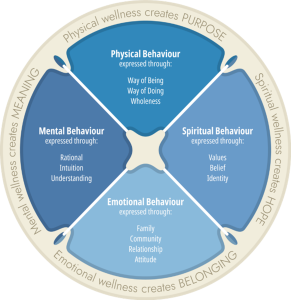
natural world. According to the Thunderbird Partnership Foundation, integrating Indigenous
healing practices into our self-care routines can build resilience by strengthening our sense of
hope, belonging, meaning, and purpose.
These are not just abstract ideas—they’re essential anchors that can help us navigate through
challenges like imposter syndrome and find steadiness in our lives.
Incorporating Indigenous Practices into Self-Care
Here are a few examples, inspired by Indigenous wellness models, of how you might integrate
holistic care into your routine:
- Body: Engage in traditional physical activities like walking in nature or dancing;
incorporate rest and nourishment through mindful eating. - Mind: Practice reflection and learning through journaling, storytelling, or seeking the
guidance of Elders or mentors. - Spirit: Connect with your culture or spirituality through prayer, ceremony, or spending
time on the land. - Emotions: Share your experiences in talking circles or support groups and engage in expressive outlets like art or music.
These practices encourage a return to balance, not perfection, and invite us to care for all parts of
ourselves.
Final Thoughts
Whether you’re navigating a new job, starting a new chapter, or just trying to hold everything
together, know that you are not alone in experiencing self-doubt. The key is not to silence those
feelings, but to meet them with care, intention, and grounded healing practices.
By embracing Indigenous wellness frameworks, we can create space for deeper self-
understanding and growth—rooted not in fear, but in connection, meaning, and resilience.